Issues with AHF/ TIH & Chlorine Tank Car Valves
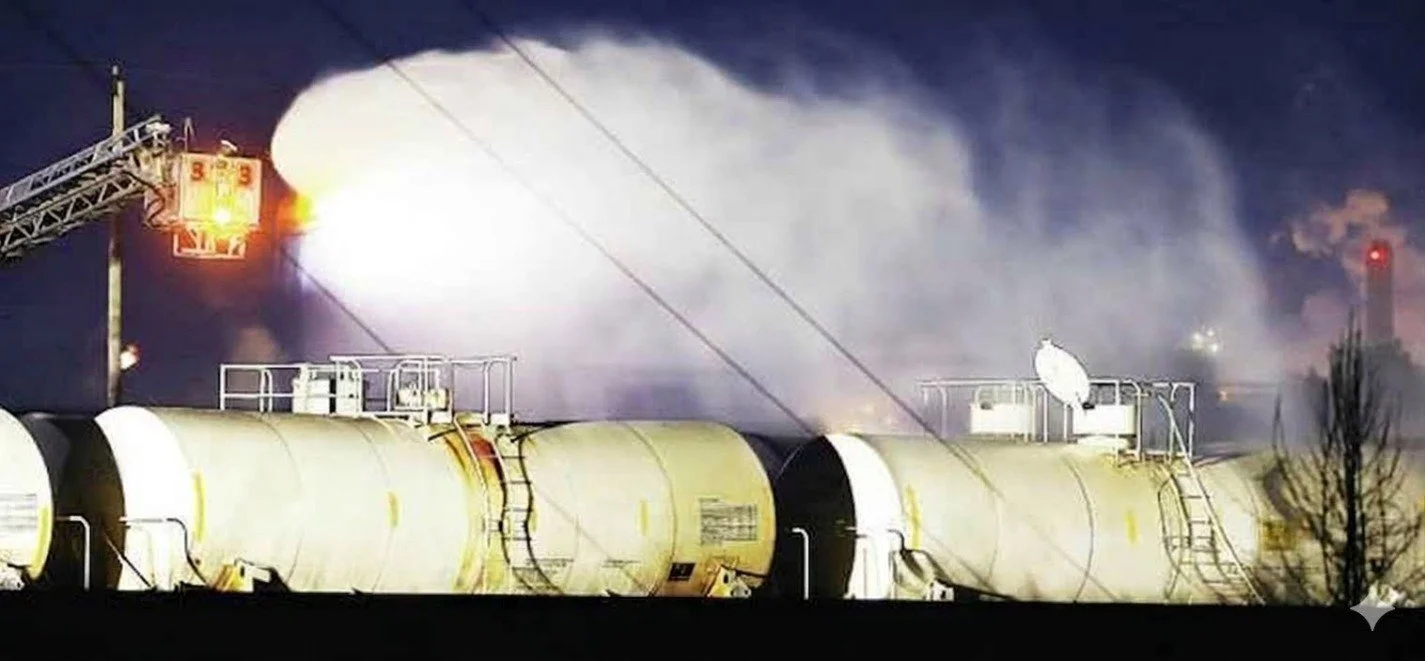
Shipping hazardous materials by rail?
Using expensive, hard-to-get, 30+ year old valves?
Struggling with continuous on-going leaks/ repairs?
We listened!
LIMITED CHOICES - STATUS QUO
Railway tank cars transport liquids; some inert, some flammable and some highly poisonous & very toxic (TIH & PIH). Each commodity requires particular preparation and care in handling, to ensure it is safely loaded, secured, transported and then unloaded. In most cases, shippers have a variety of manufacturer/ valve options to pick from. In the case of the most dangerous of commodities, their options are very limited, in some cases they only have the one option!
Having limited, or as mentioned a sole supplier, means little to no competition, no incentives to correct design flaws, ensure consistent product quality or to invest in product development. Similarly, prices can spike without competitive counterbids, long lead times (up to 52 weeks) have become somehow ‘normal’ and if customer service is also less than stellar….
ELIMINATING KNOWN LEAK PATHS, IMPROVING SAFETY AND EXTENDING QUALIFICATION PERIODS
In 2020, TransQuip was approached by a number of shippers seeking lethal-service tank car valve alternatives for an array of highly dangerous commodities. Leaks were occurring in numerous places and no matter what they tried, nothing would consistently remedy the issues they were experiencing. Some shippers upgraded body materials, other reworked their maintenance and loading procedures, all to no avail.
With no alternatives for these specialized services, TransQuip partnered with Fort Vale (UK); globally renowned for their transportation valves in these highly dangerous commodities.
INDUSTRY INPUT – SOLUTIONS
It quickly became apparent the flaws in the existing valves were attributable to inherent design flaw and not material compatibility or manufacturing defects. Worryingly, it has been over 30 years since any new valves, designed specifically for these shippers have entered into the AAR arena. Needless to say, since the 1990s, much has changed in the industrial valve world, but not in rail.
Seeking extensive industry feedback, we surveyed shippers, car builders, industry groups and loaders for their input. What would a 2020’s valve package look like? What would best-of-best look like? We compiled everyone’s wish list, applied numerous global, industry-specific standards, built prototypes - then repeated the entire process until we had developed something the industry agreed met all their needs.
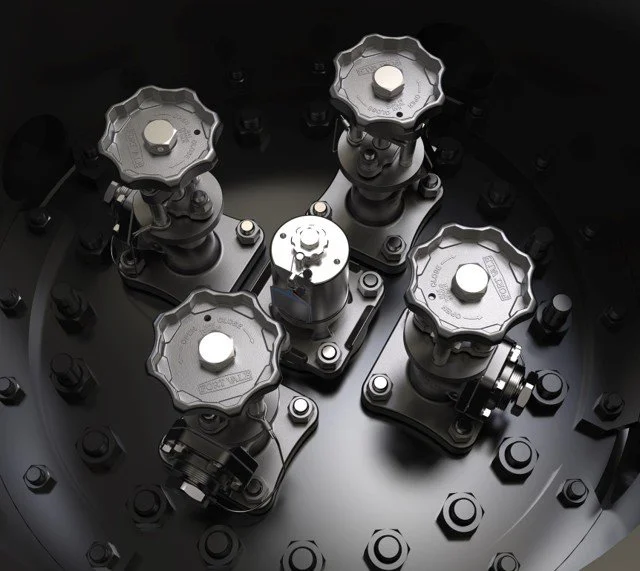
After 3 years of research, design and extensive testing, we finalized two new designs (AHF/ TIH & Chlorine), resolving all the unspoken issues, greatly improving safety, introducing features never seen or used in rail, providing greater efficiency and potentially extending the shorter qualification periods these services currently require.
The Valves shown below, are cast at Fort Vale’s foundry to Lethal standards, which although not required by the AAR was deemed appropriate for the seriousness of these commodities.
AHF/ TIH Dual (Shear-Off) Valves
SPECIFIC INDUSTRY ISSUES -
Incumbent issues included: the large void between the angle valve and check valve where corrosion was occurring. A warping stem causing issues with check valve engagement. Stem packing requiring frequent adjustments. Outlet flange known to consistently leak path, requiring frequent maintenance and changing. Overall short service life!
STANDARDS –
Hydrogen Fluoride Industry Practices Institute
HFIPI 01 - New Tank Car Guideline for Anhydrous Hydrogen Fluoride
HFIPI 06 - New Tank Car Guideline for Hydrofluoric Acid Solution
Eurofluor GD01 - Recommendation On Bulk Transport, Distribution And Handling Of Anhydrous Hydrogen Fluoride (Ahf) And Hydrofluoric Acid Solutions (Hf)
ASME B16.34 2020 - Valves — Flanged, Threaded, and Welding End
ASME VIII DIV 1 Appendix 7 - Lethal Service – Requires additional casting capabilities & testing
EN 14432 2014 - Tank equipment for the transport of liquid chemicals and liquefied gases - Product discharge and air inlet valves
EN 13175 2020 - Specification and testing for Liquefied Petroleum Gas (LPG) pressure vessel valves and fittings
ISO 15848 2015 - International leak testing procedures
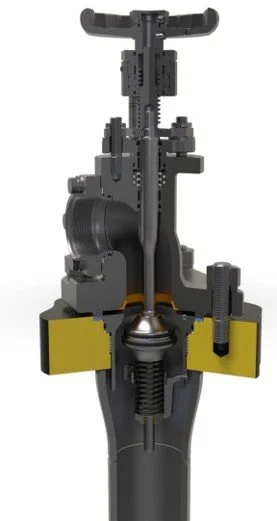
SOLUTION - ANGLE & CHECK VAVLE
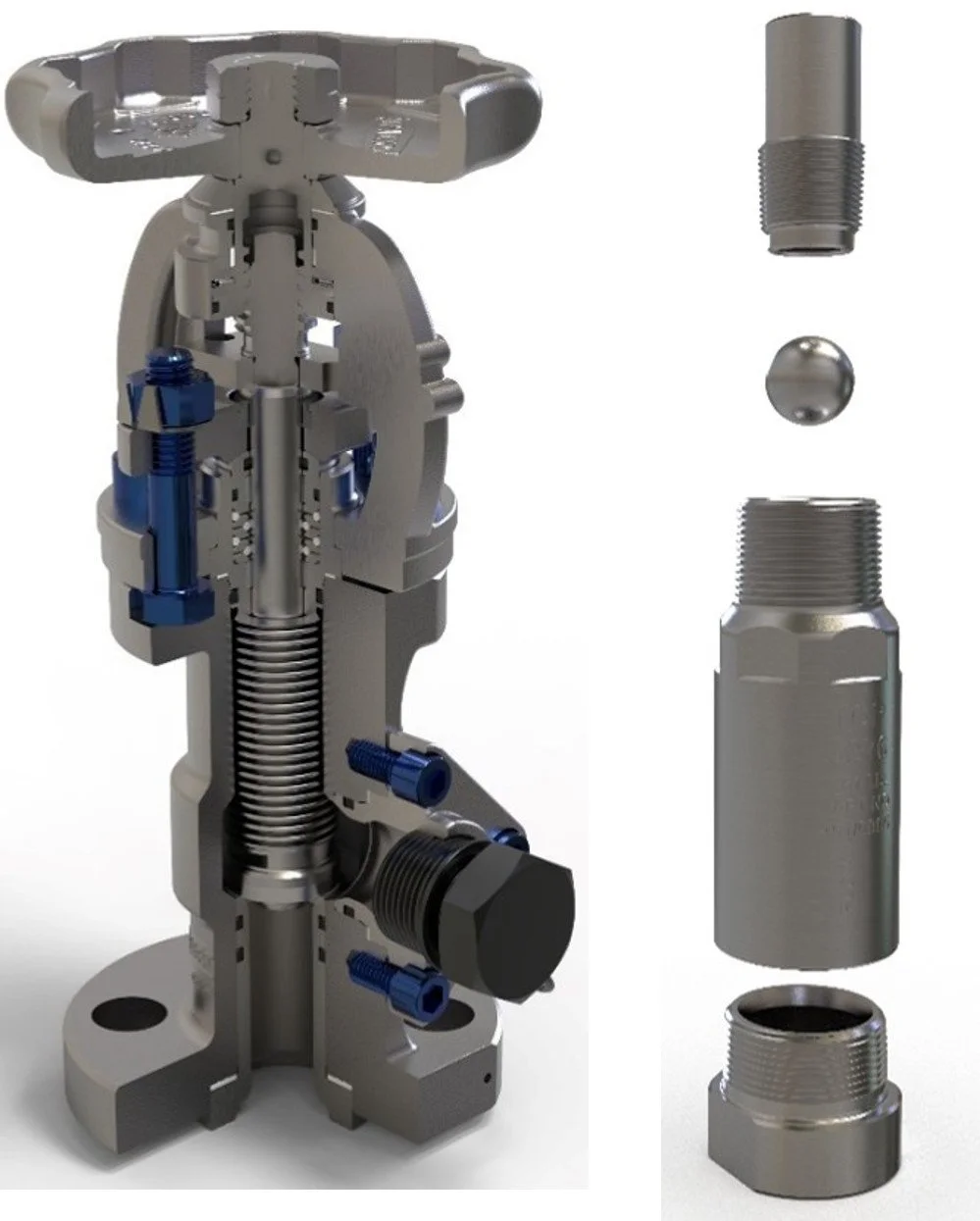
100% Hastelloy body - 38% stronger than Monel. Also available in all Stainless or Stainless body with Hastelloy trim
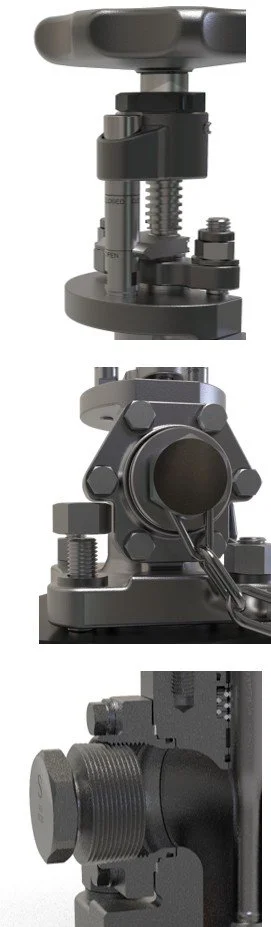
Non-Rising Stem with Laser Etched Open/ Close Indicator – low torque mechanism requires less than 2” of linear travel to fully open/ close
Dry Disconnect Sealing - provides metal-to-metal sealing (Fire-Tite)
Top Loaded Check Valve – eliminates thread weld distortion and known alignment issues with angle valve
Minimal Vold Cavity – eliminates potential for corrosive media build up
Innovative SEALTYT Stem Seal – maintains constant pressure, mitigates cold temperature creep and requires minimum stem adjustments
6-Bolt Outlet Flange – eliminates known leak issues from weight of stabber pipes
Anti Galling Plug – 416 Rockwell Hardened stainless steel with innovative easy alignment guide
Improved Flow – 40% greater flow vs current options
Powell & ERK approved – Midland & Indian Springs
Chlorine Valves
Similar to the AHF incumbent valve. Issues with leaks from the stem and outlet flange were well documented. In addition, the valve flange is also known to warp.
STANDARDS -
The Chlorine Institute Pamphlet 166 -Angle Valve Guidelines for Chlorine Bulk
The Chlorine Institute Pamphlet 049 - Handling Chlorine Bulk Highway Transports
Eurochlor - GEST 17 492 Edition 2 for Valves to be Used in Liquid Chlorine or Dry Chlorine Gas * Includes a requirement for valve body to be 0.06” thicker than ASME in chlorine service
ASME B16.34 2020 - Valves — Flanged, Threaded, and Welding End
ASME VIII DIV 1 Appendix 7 - Lethal Service – Requires additional casting capabilities & testing
EN 14432 2014 - Tank equipment for the transport of liquid chemicals and liquefied gases - Product discharge and air inlet valves
EN 13175 2020 - Specification and testing for Liquefied Petroleum Gas (LPG) pressure vessel valves and fittings
SOLUTION - ANGLE & EXCESS FLOW VAVLE
100 %Hastelloy body -38% stronger than Monel
Non-Rising Stem with Laser Etched Open/ Close Indicator – low torque mechanism requires less than 2” of linear travel to fully open/ close
Bellows Sealing – Hermetic/ Air tight sealing. Tested over 20,000 cycles
No Stem Packing Adjustments via Sealtyt system
Four port outlet flange – Withholds weight of stabber pipes
300lb (non-warping) mounting flange – Easily accessed bolting system
Fits (Dimensionally) over existing valves
Powell & C-Kit approved
EXCESS FLOW VAVLE -
100 %Hastelloy body
Fits Existing Cover Plate
One-Piece Hastelloy Casting
Easily Dismantled for easy repair
Ball guide reduces rattle/ internal stress
Ball retaining pins replaced with robust casting
15,000 lbs per hour flow rate
High inlet flow rate
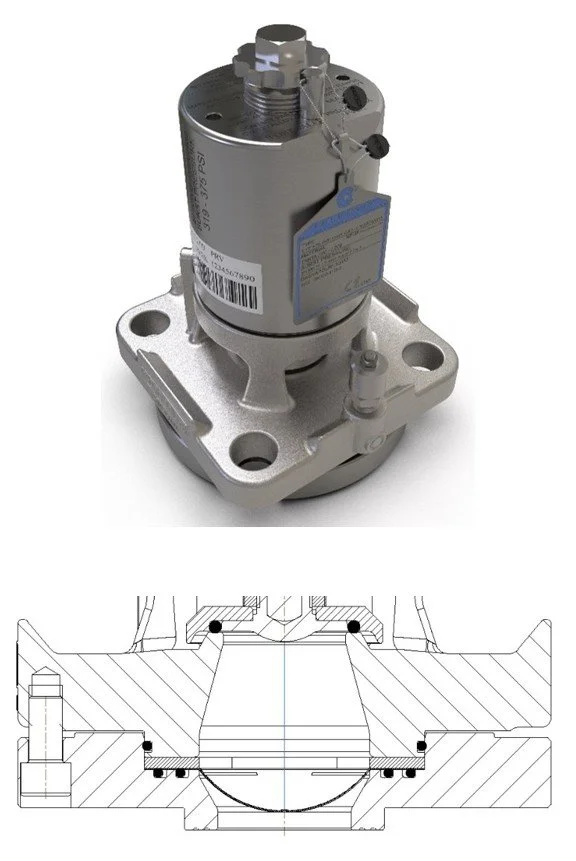
SAFETY VAVLE (AHF & Chlorine)
Hastelloy Body
Inconel Springs – Competitor uses Stainless Steel
Monel central stem guide
Flow –
AHF - 11348 SCFM vs Competitors 7299 SCFM
Chlorine 7181 vs Competitors 7299 SCFM
Floating Pressure (O-Ring sealed) plate – ensure perfect recentering in event of a release
Tell-tell indicator
Compatible with C-Kit
RUPTURE DISC (AHF & Chlorine)
Reverse Acting (Upside Down) - Can absorb 90% MAWP pressure cycling without fatigue.
Mitigates premature failures from pressure fatigue and car-humping
Non-Fragmenting - Disc petals do not interfere with safety valve
Sealed with 2x primary & 1x secondary O-Rings - Eliminates current potential leak path
TESTING & APPROVALS –
The AAR only requires valves be built to ASME recommended standards. They require no testing or benchmarking, prior to approving a new valve for service trial, which only requires a valve be actuated 40 times (20 loaded trips during 10,000 miles of service). Similarly, the AAR has grandfathered in valves that no longer meet current Chlorine Institute standards.
Unlike our competitors, Fort Vale valves have been subjected to an array of stringent global testing requirements, as well as Fort Vale’s own testing parameters, resulting, in some cases, over 20,000 cycles of testing. The technologies employed in these valves is not new, as Fort Vale has decades of proven performance using these designs in ISO valves. However, to satisfy AAR requirements, both of these valve packages are currently undergoing AAR service trials.
NEXT STEPS -
Safety is always first and foremost in every car owners/ shipper’s mind. Now that there is a second option, there really is only one option. By every measure, these new Fort Vale packages are superior to what the industry is currently using. Every facet of these packages has numerous safety features not currently available in other valves. Each component has been optimized and offers on average 40% greater flow, has been significantly strengthened (body thickness), designed to perfectly align and will undoubtedly extend qualification periods.
If you’d like more information, visit TransQuip’s website (https://www.transquip.com/ahf-tih-eo) or contact us (https://www.transquip.com/contact